
Quantum technology no longer sits quietly in research labs. Instead, it now moves toward real-world systems that mirror the early days of classical computing. Scientists say the field has entered a decisive phase, one that could reshape computing, communication, and sensing in the years ahead. While challenges remain, momentum continues to build, and progress feels steady rather than speculative.
Researchers recently outlined this shift in a major scientific paper that compares today’s quantum hardware moment to the period before the transistor transformed electronics. At that time, core physics already worked. What came next required coordination, patience, and large-scale engineering. Quantum technology now stands at a similar crossroads.
From Theory to Practical Momentum
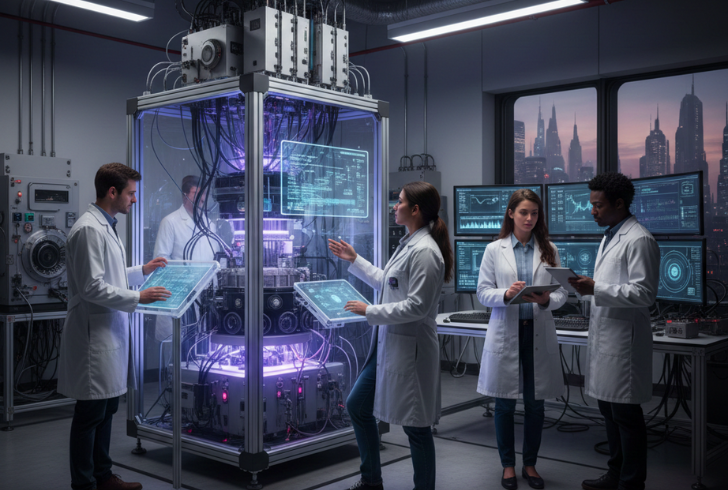
Over the past decade, quantum systems have moved beyond isolated experiments. As a result, early applications now appear in secure communication, advanced sensing, and limited computing tasks. This progress did not happen by accident. Instead, strong collaboration among universities, government agencies, and private industry accelerated development.
That same partnership model once powered the growth of microelectronics. Likewise, quantum researchers now rely on shared infrastructure, open research, and coordinated funding. Because of this, ideas travel faster from whiteboards to working devices.
According to the research team, quantum technology already supports early-stage systems rather than simple demonstrations. Even so, these systems still operate at modest performance levels. For now, they offer a glimpse of potential rather than full-scale solutions.
Why This Moment Feels Different
Scientists point to one key factor: foundational physics no longer blocks progress. The rules governing quantum behavior already exist and work reliably in controlled settings. Now, the focus has shifted toward scaling those ideas into usable machines.
David Awschalom, a senior researcher involved in the work, described this phase as similar to the earliest computing era. In his view, the challenge no longer involves discovery alone. Instead, it centers on building coordinated architectures that grow without breaking.
In other words, the science works. The systems exist. What comes next demands structure, cooperation, and long-term thinking.
Comparing Today’s Quantum Platforms
The study examined six major quantum hardware platforms, each offering unique strengths. To compare their maturity, researchers used Technology Readiness Levels, or TRLs. This scale measures how close a technology sits to real-world use, ranging from basic lab principles to operational systems.
The platforms reviewed included:
1. Superconducting qubits
2. Trapped ions
3. Spin defects
4. Semiconductor quantum dots
5. Neutral atoms
6. Optical photonic qubits
Each platform shows progress across computing, simulation, networking, or sensing. However, none has reached a point of universal dominance. Instead, strengths vary depending on the task.
Some platforms already operate as complete systems through cloud access. However, performance limits still restrict large-scale applications. For example, advanced chemistry simulations would require millions of qubits with error rates far lower than current systems allow.
Why Readiness Scores Need Perspective
While TRLs help compare progress, researchers caution against reading them without context. William Oliver, a coauthor, explained that historical perspective matters deeply. Semiconductor chips in the 1970s ranked highly for their time. Yet, by modern standards, they performed very little.
Quantum systems face a similar situation. A high readiness score today does not signal completion. Instead, it shows that basic system-level demonstrations exist. Significant improvement still lies ahead, both scientifically and technologically.
Because of this, expectations must remain realistic. Progress continues, yet timelines must account for complexity.
Leaders and Laggards Across Applications
The analysis revealed clear patterns across use cases. Superconducting qubits currently lead quantum computing development. Meanwhile, neutral atoms excel in quantum simulation. Photonic qubits dominate quantum networking, while spin defects shine in quantum sensing.
This diversity suggests that quantum technology will not follow a single path. Instead, different platforms will likely support different industries. As a result, specialization may drive adoption rather than one universal solution.
However, all platforms share common obstacles as they scale.
Scaling Remains the Central Challenge
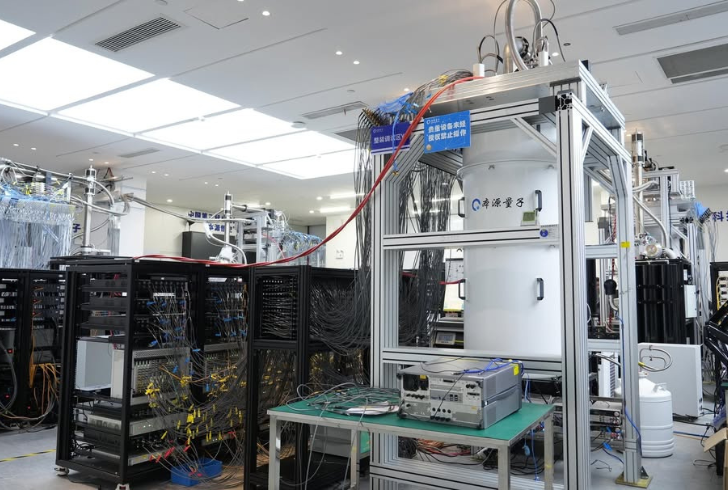
As quantum systems grow, engineering problems multiply. One major issue involves manufacturing consistency. Materials must meet extreme standards, and fabrication processes must repeat reliably at scale.
Wiring and signal control also present obstacles. Most systems still require individual control lines for each qubit. As systems expand, this approach becomes impractical. Classical computing faced a similar problem decades ago, known as the “tyranny of numbers.”
Other challenges include:
1. Power management across large systems
2. Temperature control at ultra-cold levels
3. Automated calibration for thousands of components
4. Coordinated system-level operation
Each issue grows harder as complexity increases. Because of this, scaling demands more than incremental improvement. It requires architectural redesign.
Lessons From Computing History
The paper draws clear parallels to classical electronics. Breakthroughs such as lithography, transistor materials, and integrated circuits took decades to mature. Even after initial success, refinement required time, investment, and patience.
Quantum technology appears set to follow a similar arc. Researchers argue that top-down system design will play a critical role. At the same time, open collaboration must continue to prevent fragmentation that slows progress.
Most importantly, expectations must stay grounded. Rapid gains remain possible, yet sustainable progress depends on steady, coordinated effort.
A Path Built on Coordination and Time
Quantum technology now stands at a defining moment. The building blocks exist. Early systems function. Momentum continues to grow. Still, the road ahead requires discipline rather than hype.
By learning from computing history, researchers aim to avoid past mistakes. With patience, collaboration, and realistic timelines, quantum systems can evolve from promising tools into foundational technologies.
As progress continues, each challenge solved brings the field closer to utility-scale impact. That steady movement forward, rather than sudden leaps, defines this era of quantum innovation.